
Last updated November 16, 2026
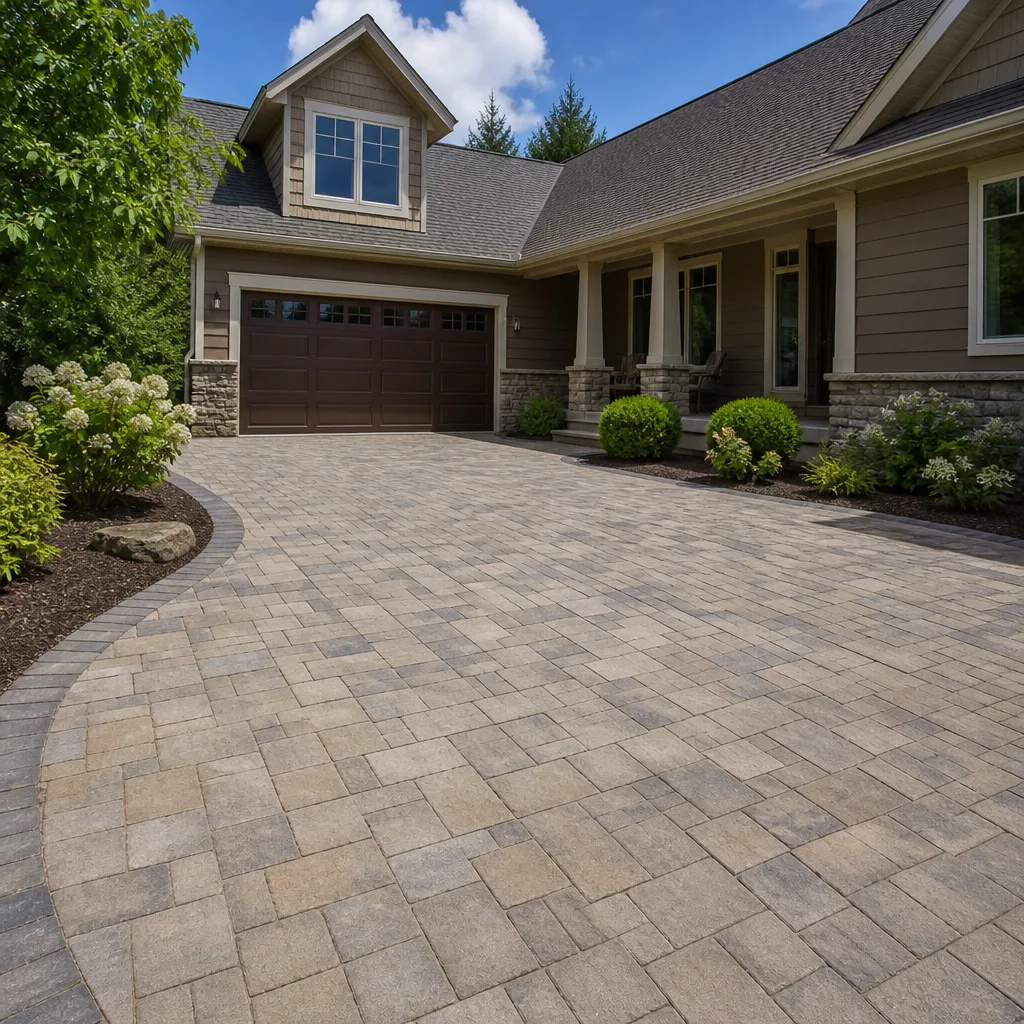 Driveway & pavers
 Kitchen remodeling
 Bathroom remodeling
 Home additions & ADU
 Roofing
 Windows & doors
 Fence
Free written scope consultation - allowances, timeline, and change-order rules on paper before a single trade is scheduled
The Complete Driveway & Pavers Guide for Miami Beach Homeowners
Most paver failures in coastal South Florida happen within 36 months, and it’s almost never the installer’s fault. It’s the material. A paver that performs beautifully in Atlanta or Austin can crack, chalk, or shed its joint sand here, because the ground it sits on floods twice a year and the sun never really lets up. Choosing a driveway surface in Miami Beach is an engineering decision long before it’s a style one. This guide walks through what actually survives here: base depths for our water table, salt tolerance across travertine, porcelain, concrete, and brick, permeable systems the county expects, and how a driveway ties into a pool deck or walkway so the whole project finishes clean.
Quick Answer
For a Miami Beach driveway, the materials that hold up best are porcelain pavers, travertine, and high-density concrete pavers rated for salt exposure. The base must be engineered for a high water table with proper drainage and compaction, not a standard inland specification. Expect permeability, elevation, and lot grading to matter as much as color and pattern.
Styles & brands we work with
- Kitchen remodeling
- Bathroom remodeling
- Home additions & ADU
- Roofing
- Windows & doors
- Driveway & pavers
- Fence
Table of Contents
- Why Miami Beach Climate Changes the Material Shortlist
- Travertine vs. Porcelain vs. Concrete vs. Brick: A Side-by-Side Comparison
- Base Depth and Compaction in a High Water Table
- Permeable Pavers and Miami-Dade Drainage Expectations
- Sequencing the Driveway With Pool Decks, Walkways, and Landscaping
- How Much Do Driveway Pavers Cost in Miami Beach?
- Common Mistakes to Avoid
- Frequently Asked Questions
Why Miami Beach Climate Changes the Material Shortlist
The three forces that age a driveway in Miami Beach are ultraviolet radiation, groundwater, and salt. Each one attacks something different about a paver. UV bleaches and chalks low-grade concrete and some pigments. Groundwater wicks upward through any base material that isn’t properly drained, carrying dissolved minerals that surface as white efflorescence. Salt accelerates surface erosion at the joints and grout lines, which is where most failures begin. Most spec sheets are written for inland climates with dry summers and distinct seasons, and they make assumptions about groundwater depth that don’t hold in Miami Beach.
You can’t tell a paver’s salt tolerance by looking at it. A dense, low-absorption paver will perform very differently from a porous, high-absorption one, and the two can be the same color, the same thickness, and even the same price bracket. This is why we push absorption and density ratings ahead of aesthetics in screening material options for Miami Beach homes.
A short checklist we filter by before we show samples:
- Absorption rating: the lower the better; high absorption means efflorescence, spalling, and freeze-cycle-like surface flaking even in our mild winters.
- Salt tolerance: look for products tested against salt exposure, not just UV fade.
- UV color stability: pigments in low-grade concrete fade within the first few summers.
- Slip resistance when wet: real and ongoing, not just when newly sealed.
- Heat retention: a dark, dense paver holds heat long after sunset.
If you’re planning the whole exterior at once rather than just the driveway, it helps to think of the property as a single system. Our driveway & pavers service is usually the entry point, and we plan from there.
Travertine vs. Porcelain vs. Concrete vs. Brick: A Side-by-Side Comparison
Here’s how the four main driveway options compare against Miami Beach’s actual conditions. Raters differ by brand, so we’ve kept the comparison relative and honest rather than absolute.
- Travertine: Cooler to the touch than concrete under direct sun, and the surface stays grippier when wet than a polished porcelain. The trade-off is that natural travertine is a soft stone, and salt spray combined with groundwater wicking can pit lower-grade travertine over years. Choose only dense, filled travertine, and expect to re-seal on a schedule. We show travertine as the right pick for exterior entertaining areas where heat matters.
- Porcelain: Very low absorption and strong salt resistance, so efflorescence is rare. Porcelain also holds heat less than dark concrete. When it’s rated for outdoor use and combined with a permeable or pedestal system, it stays manageable under heavy rain. The main issue is installation tolerance; porcelain requires a more precise base than concrete pavers, and a sloppy install shows through quickly.
- Concrete pavers: The broadest choice, the widest brand range, and the most predictable cost. Performance comes down to density and pigment quality. A high-density, low-absorption concrete paver rated for salt exposure will do well. A cheap, porous paver will chalk, effloresce, and lose joint sand. Expect to see Belgard, Tremron, and Cambridge Pavers among the concrete options we present.
- Brick: Genuinely beautiful, high heat retention, and variable salt tolerance depending on the brick. Brick in full sun on a Miami Beach driveway gets hot underfoot and loses its appeal fast for anyone walking barefoot from the car. Brick also absorbs more water than the best concrete and porcelain products, which raises joint maintenance.
For patterns and textures that perform, Techo-Bloc and Unilock products widen the palette well beyond standard concrete. If your driveway connects to a pool deck, we plan the two surfaces together so the transition is a design feature rather than a seam.
Base Depth and Compaction in a High Water Table
A paver driveway is mostly base. The pavers themselves are the visible 2 inches; the 6 to 12 inches beneath them decide whether the surface settles, heaves, or drains. In Miami Beach, the base takes on a job it doesn’t have to do inland: it has to keep water moving despite a shallow water table. A standard inland spec of 4 to 6 inches of compacted aggregate can be entirely wrong here.
A Miami Beach paver base job typically follows this sequence:
- Excavate to the deeper profile. Enough depth to accommodate the compacted base, the bedding layer, and the paver thickness, with elevation set so the finished surface drains away from the house and away from the street.
- Subgrade assessment. Check the soil condition and the depth to groundwater. Sandy subgrade in Miami Beach is common and drains quickly, but only if the excavated profile is right.
- Geotextile separation layer. Placed between subgrade and base aggregate to stop the fine soil particles from migrating up into the base and clogging the drainage.
- Aggregate placement in lifts. Base goes in 2- to 3-inch compacted lifts, not all at once. Each lift is compacted before the next goes down.
- Plate compaction with moisture control. Too wet or too dry and the compaction doesn’t reach spec. In our humidity, getting this right takes real attention.
- Bedding course and screed. A thin, consistent bedding layer screeded flat and true, not dumped and leveled by eye.
- Paver placement and edge restraint. Concrete edge restraint on all open sides, set below the finished surface.
- Polymeric joint sand. Joint sand stabilized with polymeric binder is standard here because it resists washout far better than plain sand.
The elevation calculation deserves its own paragraph. Miami Beach lots often sit close to the water table, and a driveway that finishes too low will pond after heavy rain. We plan driveway elevation against the garage threshold, the street crown, and any adjacent pool deck so runoff has a direction to go. This step has more impact on long-term satisfaction than any color choice.
If a hardscape project is one part of a larger renovation, we can coordinate it with other trades. Our home additions & ADU team plans site access and drainage around the driveway footprint, and the reverse is true when an addition comes first.
Permeable Pavers and Miami-Dade Drainage Expectations
Permeable paver systems aren’t a design upgrade here; on many Miami Beach properties they’re a practical necessity. Miami-Dade County stormwater expectations and flood-zone lot grading rules generally require that a project not increase runoff onto neighboring lots, and where a large share of a lot gets paved, permeability is one of the ways to satisfy that. We’re not a permitting authority, so the exact requirement depends on your property and the plan review. The general picture is what matters up front: permeable systems let stormwater move into the ground instead of sheeting to the street.
A permeable paver driveway works in much the same way as a conventional one, with two differences: the base is designed as an open-graded storage layer with a specific gradation, and the joints are left open with a coarse, clean aggregate rather than packed with fine sand. That open base stores water until it can infiltrate. In a high water table, the base is sized to that water table, not to an inland specification.
Here’s where permeable design gets interesting for Miami Beach: it usually looks identical to a conventional driveway. Belgard and Unilock both offer permeable systems in pavers that read like standard finishes. You don’t sacrifice the look to satisfy the drainage plan.
When permeable makes sense on a Miami Beach lot
- The lot is in or near a flood zone and runoff to the street needs to be reduced.
- More than half the lot will end up as hardscape between the driveway, walkways, and patio.
- The property has recurring ponding in low corners after summer storms.
- You’re pairing the driveway with a pool deck and want one consistent drainage story across both.
Permeability is a good place to bring in a single contractor for the whole exterior. Coordinating the driveway, the walkways, and the drain lines across three separate crews is where drainage problems get missed.
Sequencing the Driveway With Pool Decks, Walkways, and Landscaping
Pool decks, walkways, landscape borders, and driveways are usually designed by different people and installed by different crews. On a Miami Beach property that’s the fastest way to a mismatched exterior. Different materials at every transition, joint sand that fails at the seam, drainage that routes toward the house because nobody coordinated elevation. When one contractor handles all of it, the surfaces read as one design and the sequencing is planned before the first lift of base goes down.
This is the order that usually works best:
- Set the drainage plan first. Determine grades and runoff direction across the whole exterior so no surface contradicts another.
- Locate the buried services. Irrigation, pool plumbing, electrical runs for lighting, gas for an outdoor kitchen. Mark them before excavation.
- Install the pool deck and the driveway to the same base standard. One base spec, one compaction standard, one edge restraint approach.
- Tie the walkways into the driveway and pool deck. Same material family, related pattern, joints aligned where visible.
- Finish landscaping edges last. Landscape borders and plantings go in after the hardscape is complete so soil and mulch don’t bleed into the joint lines.
- Clean, seal if specified, and inspect. One pass across the entire exterior rather than three separate handoffs.
Fence lines belong in the same plan. If the fence needs replacing before or after the pavers go in, we coordinate that through our fence installation team so posts and paver borders meet cleanly instead of one being dug up for the other. For a full-house approach across every trade, our Construction Miami Beach service pages lay out what we cover from the driveway to the roof.
How Much Do Driveway Pavers Cost in Miami Beach?
Driveway pavers in Miami Beach typically land between $16 and $38 per square foot installed, and the spread comes down to material, base depth, and permeability. The written estimate sets the final price. Here’s the rough breakdown we use to shape a budget:
| Component | Typical Range per Sq Ft |
|---|---|
| Standard concrete pavers (installed) | $16 – $24 |
| Premium concrete (Belgard, Tremron, Cambridge) | $20 – $30 |
| Travertine | $24 – $36 |
| Porcelain | $26 – $38 |
| Brick | $22 – $34 |
| Permeable system upgrade | add $3 – $6 |
| Base engineering for high water table | add $2 – $5 |
| Pool deck or walkway (without full driveway) | $18 – $32 |
The variables that move the number most are driveway size, the depth of excavation required, whether the base needs a geotextile layer, polymeric versus plain joint sand, and the pattern complexity. A simple running-bond pattern keeps labor down. A complex custom pattern takes time and showed in the estimate.
We show options at different price points and explain the trade-offs. A travertine deck that costs more on the quote may need sealing every few years. A concrete paver that costs less on day one may need re-sanding and joint maintenance sooner. Nothing is free in a paver budget; the question is whether the cost shows up on install day or over the next decade.
One last thing on estimates for Miami Beach. Line-item quotes that name the material, the base depth, the joint sand type, and the edge restraint product are far easier to compare than a lump-sum number. Ask for the spec in writing.
Common Mistakes to Avoid
- Specifying material for the wrong climate. An inland concrete paver that chalks or a lower-grade travertine that pits is a costlier mistake than the install itself. Match the product to salt, UV, and groundwater, not to what looks good on a showroom floor.
- Using a standard inland base spec. Six inches of base compacted to a standard schedule isn’t always right for a high water table in Miami Beach. Depth and drainage need to match the lot.
- Skipping the geotextile layer. Fine soil particles migrate up through base aggregate and clog the drainage over time. It’s a hidden failure you only see after the first few rainy seasons.
- Setting the finish grade without checking where the water goes. A driveway that drains toward the garage instead of the street ponds every storm, and the fix usually means digging up the pavers.
- Installing with plain sand in the joints. Polymeric joint sand keeps the joint intact and blocks weed growth; plain sand washes out under Miami Beach rain and lets weeds take hold.
- Handing the driveway to one crew and the pool deck to another. Two different base depths, two different elevations, and a joint line at the seam that looks patched in. Use one contractor across the exterior.
- Choosing a pattern that fights daily traffic. A complex pattern with tight curves wears and re-sands faster under a car. In a driveway, simpler patterns last longer.
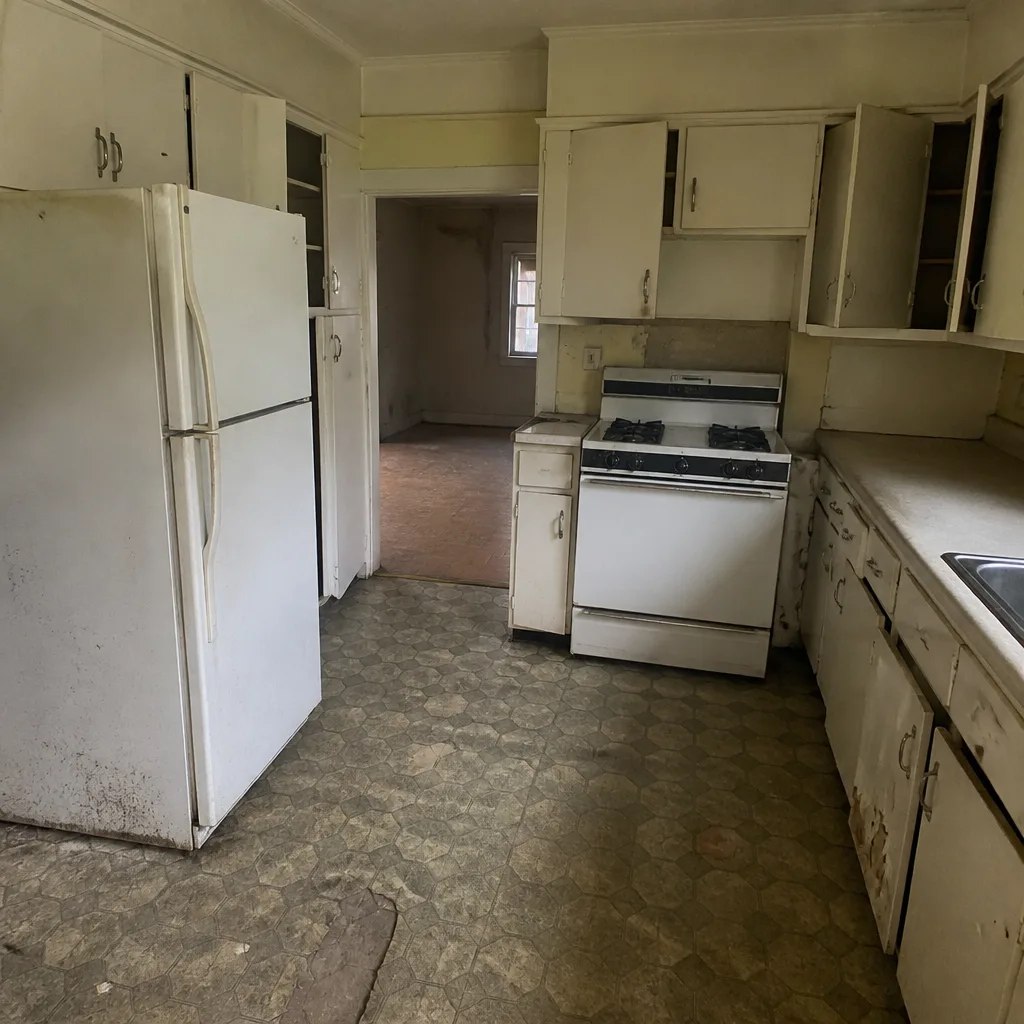
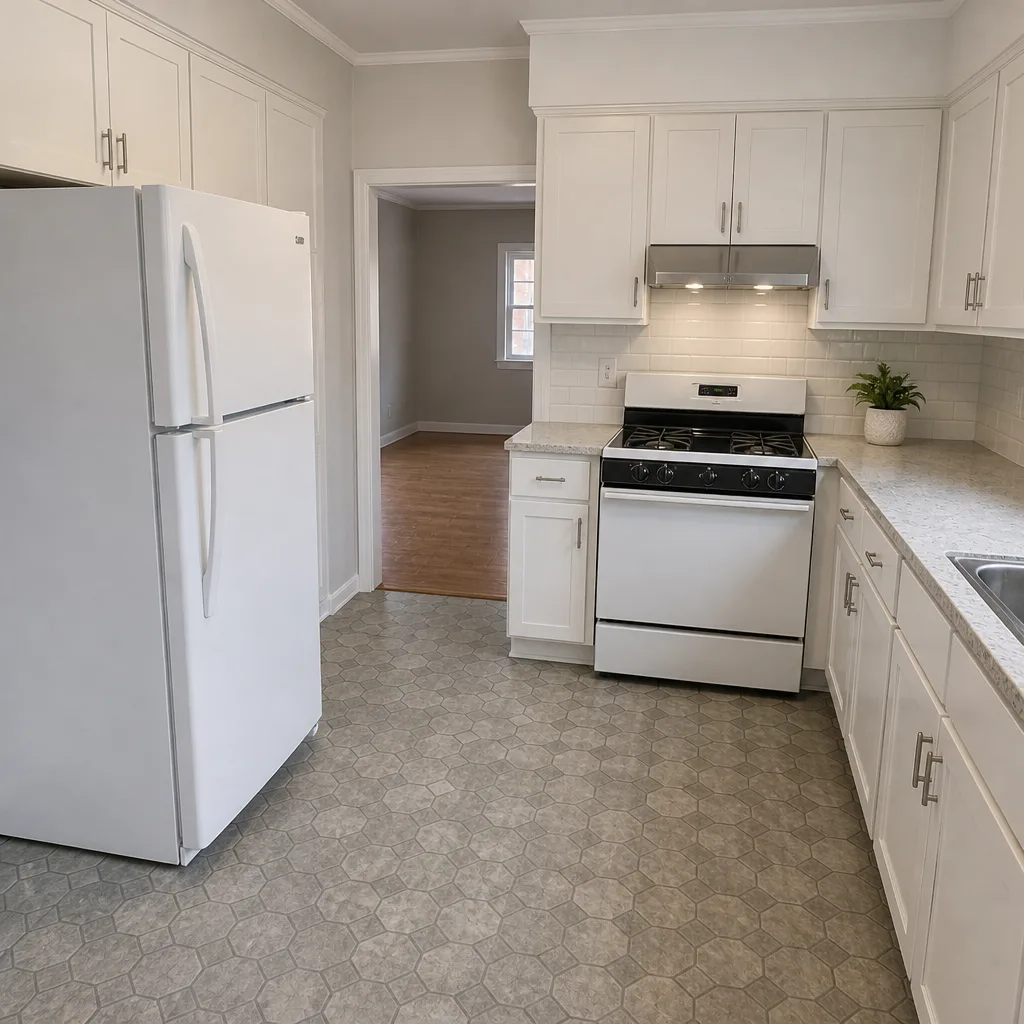
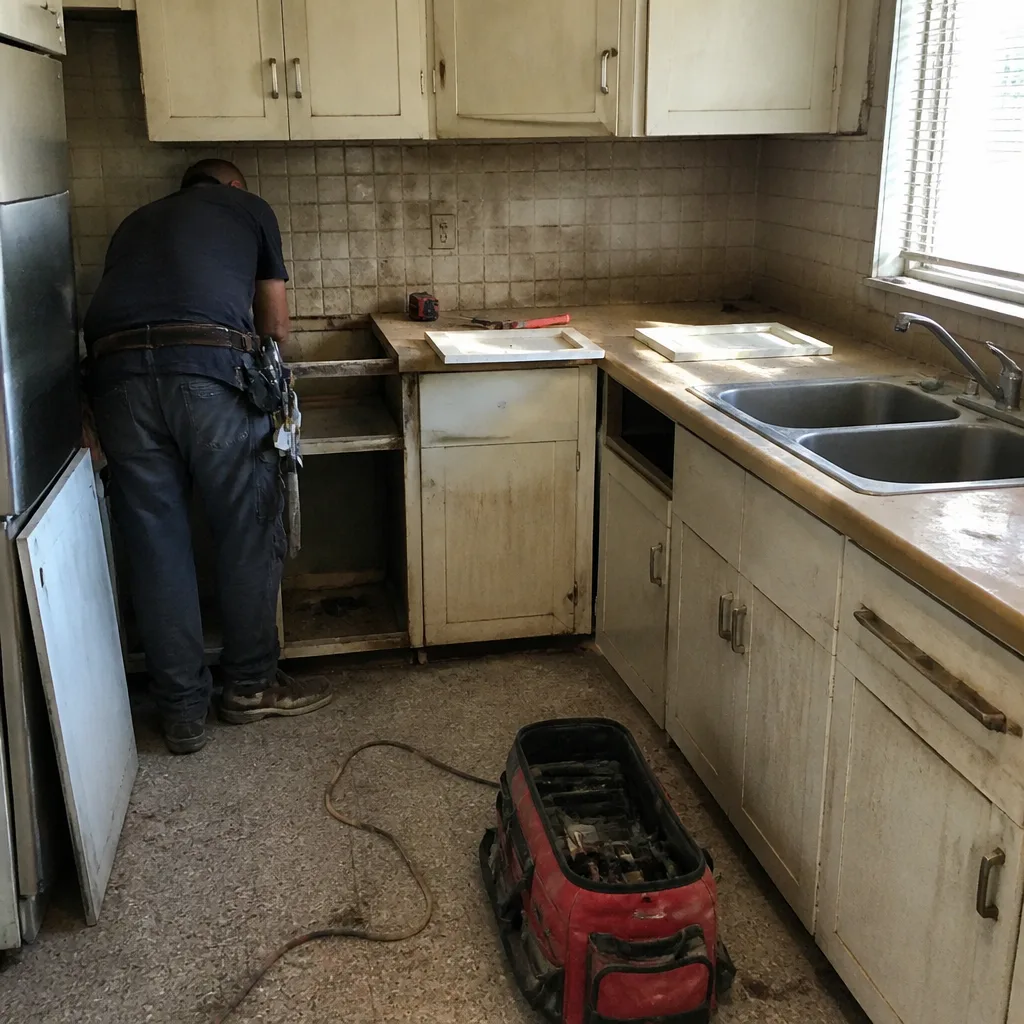
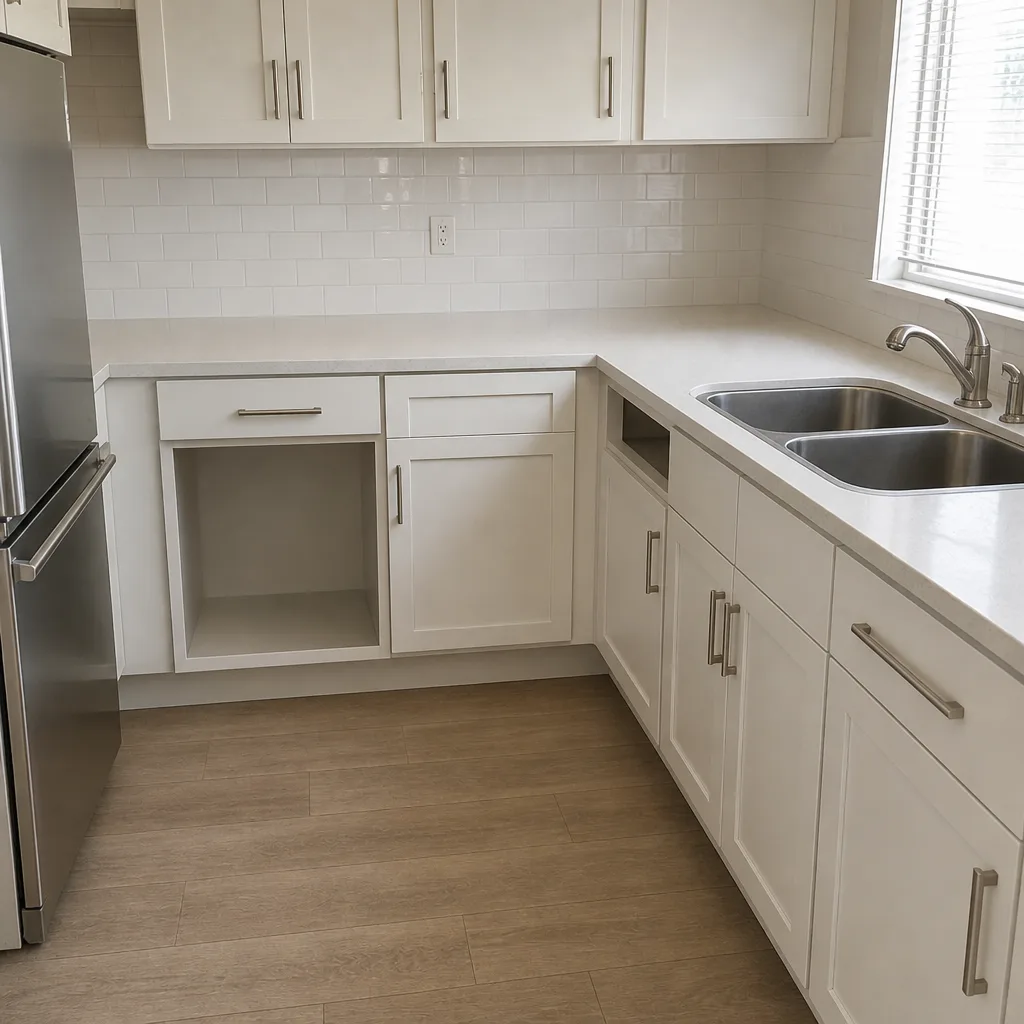
See the difference
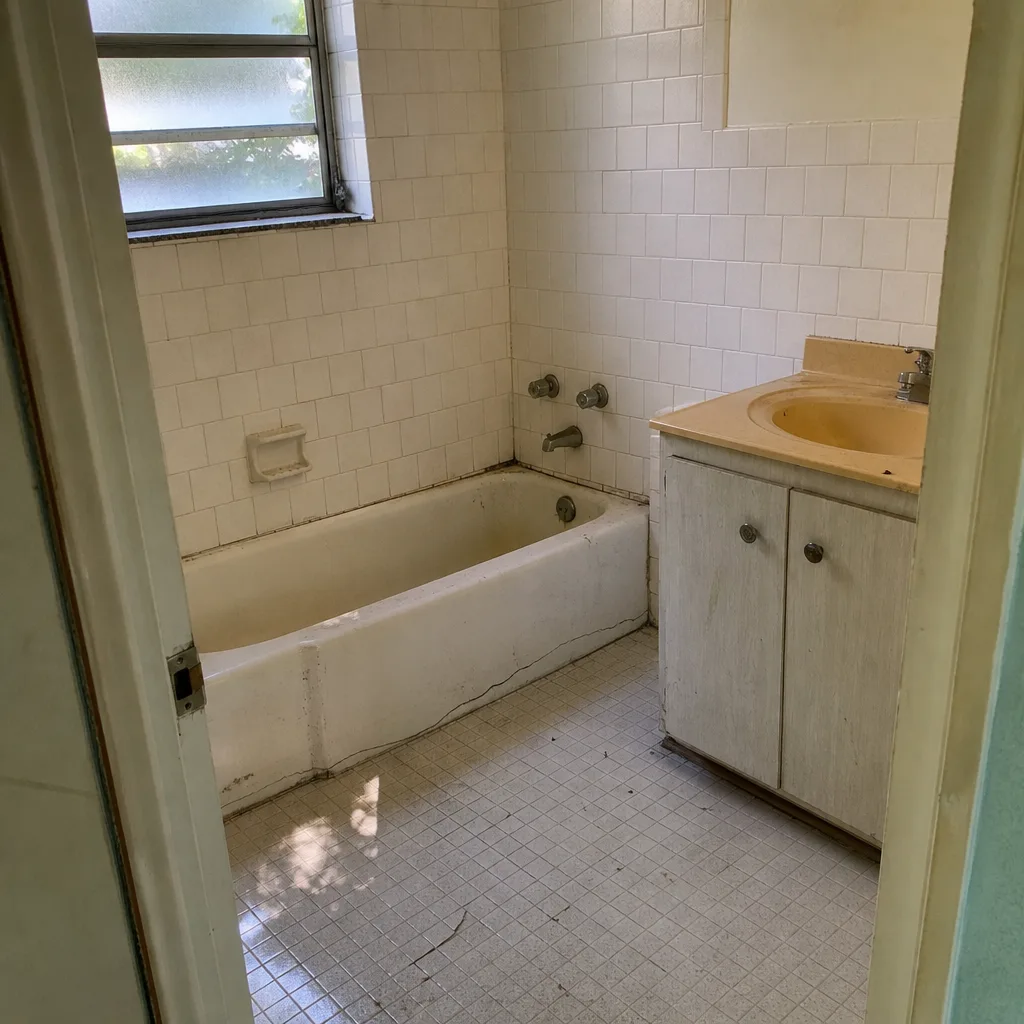 Before
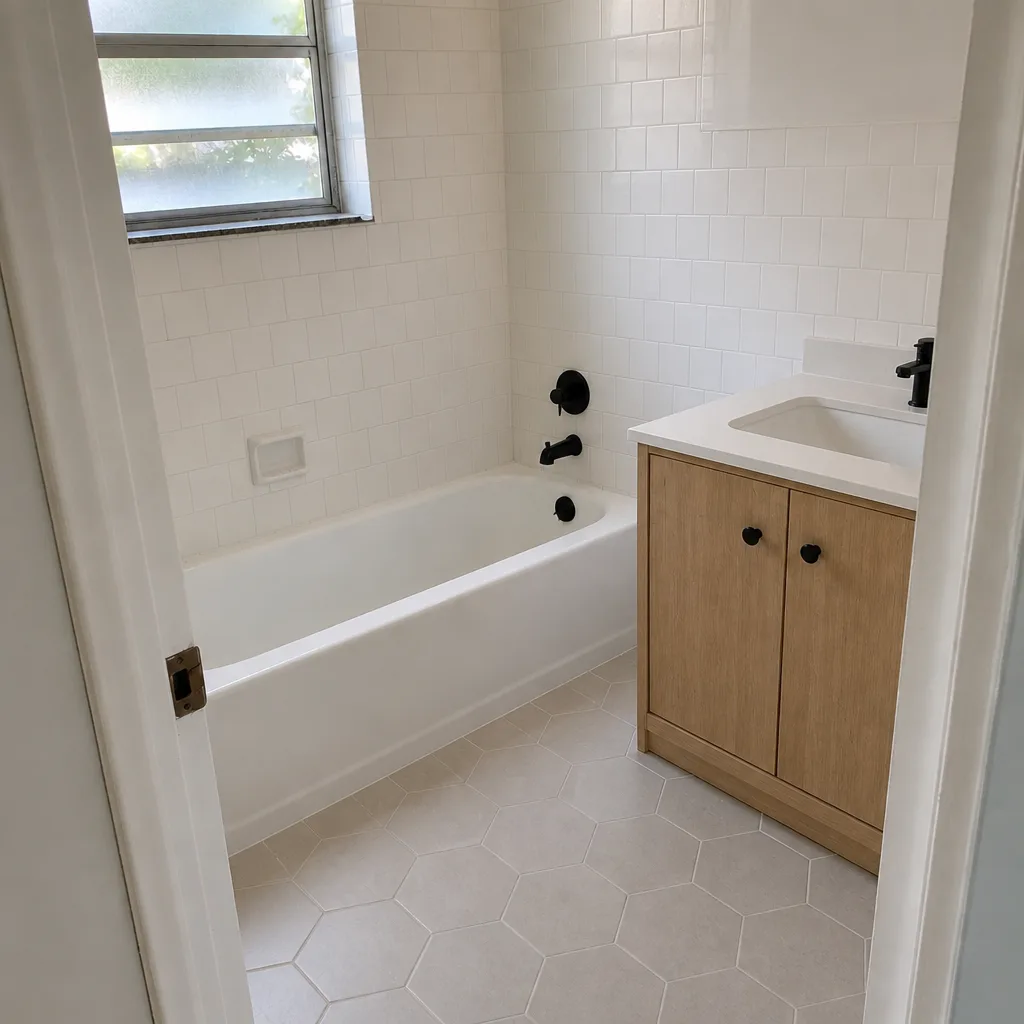 After
 Before
 After
 Before
 After
When to Call a Professional
Pavers are heavy, and the base preparation involves compaction machinery, excavation, and careful elevation work. That said, some situations don’t need a contractor. A single cracked paver in an otherwise stable driveway is a repair, not a rebuild. If pavers are settling unevenly, ponding after rain, or showing white efflorescence across a whole section, the base or the material is the problem and it needs an experienced eye.
Call a professional when:
- You’re installing a new driveway, pool deck, or walkway of any size.
- You’re planning a permeable system for a flood-zone or high water table lot.
- You’re coordinating the driveway with a pool deck, fence, or landscaping and want one contractor.
- The existing driveway is showing settlement, efflorescence, or joint failure across more than a small area.
- You’re pricing the project and want a line-item estimate before you commit.
Construction Miami Beach offers free estimates in Miami Beach. Call (844) 320-9310. We answer 24/7. Fast dispatch from 7am to 7pm, Sunday through Friday.
Our technicians have up to 14 years of experience with paver installation in coastal South Florida. We work with Belgard, Unilock, Tremron, Techo-Bloc, Cambridge Pavers, and other brand partners so you can see how different materials perform at different price points.
Frequently Asked Questions
Porcelain and high-density concrete pavers rated for salt exposure perform best in Miami Beach, with travertine as a strong choice when you want a cooler surface and don’t mind a sealing schedule. The right answer depends on budget, traffic, and whether you want a permeable system. We show samples of all three. Call (844) 320-9310 for an exact quote; estimates are free.
Most driveway and hardscape projects in Miami Beach require a permit, and where the property is in a flood zone or a large share of the lot is being paved, the plan review may also cover drainage and grading. The exact requirement depends on your property. We can walk you through the plan review step as part of the estimate. Call (844) 320-9310 to get started.
Efflorescence in Miami Beach comes from groundwater wicking up through the base and surfacing dissolved minerals, and it’s accelerated by high absorption in the paver itself. The fix is two-part: choose a low-absorption paver, and build the base with geotextile separation and drainage designed for the water table. A properly built system rarely effloresces. Call (844) 320-9310 to talk through material options.
A residential driveway in Miami Beach usually takes several days from excavation to final joint sand, depending on size, base depth, and whether the project includes a pool deck or walkway. Permeable systems and complex patterns take longer because of the base and pattern work. Your written estimate will include a realistic schedule. Call (844) 320-9310 for a project-specific timeline.
No, not when the estimate is properly itemized. Our written estimates name the material, the base depth, the joint sand type, and the edge restraint, and the price is fixed to that scope. Change orders only come from changes the homeowner requests or from conditions the estimate couldn’t see before excavation. Call (844) 320-9310 to get a written estimate.
Yes. We plan the pool deck, walkways, fence line, and driveway as one project so base depth, elevation, and joint lines match across the exterior. That’s where a single-contractor approach makes the biggest difference on a Miami Beach property. Call (844) 320-9310 for a whole-exterior estimate.
The Bottom Line
Picking a driveway paver in Miami Beach is an engineering decision. Salt exposure, a high water table, and year-round UV rule out a lot of materials that perform well elsewhere. Porcelain and high-density concrete pavers rated for salt tolerance are the safest bets, with travertine as a solid pick when you factor in sealing maintenance. The base matters more than the surface, and the base has to be engineered for our water table, not an inland spec. Permeable systems satisfy drainage plans and often look like a standard driveway. And the exterior is one project, not five: driveway, pool deck, walkways, fence, and landscaping work best when one contractor sequences them.
We handle driveways, pool decks, walkways, fence installation, and the full scope from the foundation to the roof, with over 50 manufacturer brand relationships across every trade. Our technicians have up to 14 years of experience. We’re happy to walk through material options and price points with you and put a line-item estimate in writing.
Call (844) 320-9310 for a free estimate. We answer 24/7. Fast dispatch from 7am to 7pm, Sunday through Friday, closed Saturday.
Written by the team at Construction Miami Beach.