
Last updated November 16, 2026
 Home additions & ADU
 Kitchen remodeling
 Bathroom remodeling
 Roofing
 Windows & doors
 Driveway & pavers
 Fence
Free written scope consultation - allowances, timeline, and change-order rules on paper before a single trade is scheduled
Construction Warning Signs: A Miami Beach Homeowner’s Reference Guide
Most homeowners picture a construction problem as something dramatic: a sagging ceiling, a wall that visibly moves, water pouring through a light fixture. The problems that actually cost Miami Beach homeowners the most money rarely announce themselves that way. They show up as a faint orange stain near a window header, a chalky white bloom on a block wall, a hairline gap where an impact window frame meets the stucco. Each one looks like nothing. Each one is your house telling you something it can’t tell you any other way. This guide teaches you to read those signals the way an experienced contractor does during a walkthrough: what the sign looks like, where it appears, what it usually means, and roughly how urgent it is. By the end you’ll know which findings are cosmetic, which are maintenance, and which justify a professional visit before the next rainy season.
Quick Answer
The warning signs that matter most on a Miami Beach home are: rust-colored staining on concrete or stucco (usually rebar corrosion inside the wall or slab), efflorescence that shows up in a defined pattern rather than scattered patches (usually active water moving through the block), gaps or blocked weep holes at impact window and door frames, soffit and fascia that stays soft after a dry stretch, and driveway or paver heaving that runs in a straight line. Any of these that recurs after you address it once is a signal to get a professional eyes-on assessment – not a signal to buy more paint.
Styles & brands we work with
- Kitchen remodeling
- Bathroom remodeling
- Home additions & ADU
- Roofing
- Windows & doors
- Driveway & pavers
- Fence
Table of Contents
- Rust Staining on Concrete and Stucco
- Efflorescence vs. Active Water Intrusion in Block Walls
- Soffit and Fascia in a High-Humidity Climate
- Paver and Driveway Heaving: Roots, Soil, or Drainage
- Impact Window and Door Frame Warning Signs
- A 10-Minute Self-Walkthrough You Can Do This Week
- Common Mistakes to Avoid
- When to Call a Professional
Why Rust Staining on Concrete and Stucco Is Never Cosmetic
A rust-colored stain on a Miami Beach wall is cosmetic about as often as a check-engine light is decorative. What you’re seeing is the result of rebar or embedded steel mesh corroding inside the concrete or behind the stucco. When steel oxidizes it expands, and the expansion pushes outward on the concrete around it until it cracks, spalls, and eventually lets a section of cover fall away. The stain is the earliest visible stage. By the time the concrete is actually popping off, you’re well past the cheap repair.
Location tells you a lot about severity. Here’s how we read it on a walkthrough:
- Window and door headers: A rust stain running vertically down from the corner of a header usually means moisture is getting behind the framing at an opening, not just surface rust. This tends to involve the flashing around the window as much as the steel itself.
- Slab edges: Staining along the exposed slab edge at a porch, walkway, or garage floor usually points to steel sitting too close to the surface with insufficient concrete cover. South Florida’s moisture cycle works on that steel continuously.
- Columns and beams: On a second-floor balcony column or an exposed structural member, rust staining is the most serious location. Steel in a load-bearing element is doing structural work, and the repair involves more than patching.
The reason staining matters so much in Miami Beach specifically is the year-round humidity. There’s no cold dormant season here where corrosion slows down. Every wet season adds another layer, and what would take a decade to progress in a drier climate can move noticeably faster with consistent moisture, sun, and warm temperatures. When we repair concrete, we’re repairing it with products meant to hold up to a warm, wet climate – Sakrete’s repair mixes, for example, are what we’d reach for over a generic patch, so the fix holds rather than powders. If you have rust staining on a structural element like a column or beam, call (844) 320-9310. We answer 24/7. Fast dispatch from 7am to 7pm, Sunday through Friday.
Efflorescence vs. Active Water Intrusion: The Pattern Tells You Which
Efflorescence is the white, powdery, or slightly crystalline bloom you see on concrete block, stucco, and masonry. It’s the natural result of water moving through the material and leaving behind salts as it evaporates at the surface. A little efflorescence on a wall that gets hit by rain is normal. Efflorescence that keeps coming back, or that shows up in a specific pattern on a wall that shouldn’t be wet, is not.
The trick to diagnosing it is to look at the pattern and the location, not just the total area. Here’s the difference in what you actually see:
- Cosmetic efflorescence: Scattered, thin, and bluish-washed. It brushes off easily. It’s usually strongest at the base of a wall after a heavy rain and dries back on its own. This is just a wall being a wall in a humid climate.
- Active water intrusion: A defined band, patch, or edge-shaped region that pushes back out within days of being cleaned. The salts have a source, and the source is water entering through a crack, failed stucco, a bad joint, or the top of a wall. The reason it recurs is the water path is still open.
Here’s the test we’d suggest: scrub a small patch clean with a stiff brush and water, note the date, and watch it. If it comes back within a week or two on a wall that hasn’t been direct-rained-on, that’s active. Scraping efflorescence off without finding the moisture source achieves nothing – the salt is the symptom, not the problem. Common culprits are failed caulking at window perimeters, cracks in stucco, and water getting behind a wall cap that was never properly flashed.
Once we’ve identified the moisture path, the repair depends on what we find. Sometimes it’s a stucco and flashing repair. Sometimes it’s the roof edge or a roof-to-wall junction – which is where a company with Construction Miami Beach capabilities matters, because you don’t want two contractors arguing over who’s responsible for a water problem that spans both trades.
Soffit and Fascia Deterioration vs. Storm Damage
Soffit and fascia are the two most weather-exposed finished surfaces on the outside of your house, and they fail in a predictable way when the climate is warm and humid. Fascia is the board that faces out at the roof edge. Soffit is the underside panel that closes the eave. Both live in the environment that shortens their life: rain that hits them at an angle, humid air that traps moisture under the eave, and strong afternoon sun that bakes the paint film until it cracks.
The failure pattern is different from storm damage, and it’s worth knowing which one you’re looking at:
- Slow humidity-driven decline: paint peeling from the bottom edge upward, sections of fascia that feel soft when you press on them, dark staining running vertically down the fascia face, and soffit panels that sag or pull loose from their tracks. This is the ordinary course of a warm, humid environment working on wood or wood-composite trim.
- Storm damage: impacts, lifted or missing soffit panels, wind-driven water staining concentrated on one side of the house, or pieces held together with tape and hope. This is a sudden event, and the calls usually come all at once.
What makes soffit and fascia urgent is what they protect. A failed soffit panel is an open invitation to birds, insects, and raccoons, which can nest in the attic in a way that’s genuinely difficult to clear later. A soft fascia board at the roof edge is also where eave water starts entering the wall assembly. If your fascia is soft under a fingernail in an area where you’ve also noticed rust stain at a window header, those two findings together are worth a professional look.
When we replace fascia and soffit, we’re not just nailing up new boards. The trim has to shed water from bare wood, and that means priming all faces and choosing materials that hold up under Miami Beach’s humidity cycle rather than generic pine. Roof replacements typically address the fascia at the same time, which is one of the reasons we work with GAF and Owens Corning systems – the roof, the fascia, and the flashing at the eave have to be one coordinated assembly.
Paver and Driveway Heaving: Roots, Soil, or Drainage Failure
A heaving driveway is one of those problems that looks like a single issue and is actually at least three, and the fix is completely different depending on which one you’re looking at. Before you call anyone, look at the shape and direction of the lift.
- Root intrusion: The heave runs in a linear path or a single ridge, often perpendicular to or radiating from a nearby tree. The pavers are lifted as a single unit with a slightly arched profile.
- Soil subsidence: The pavers dip or slope in a broader, softer pattern. You’ll see edge gaps widening and joints in the base material settling. Usually worst at the edge nearest a foundation or a lawn transition.
- Drainage failure: The lift or dip is tied to how the water runs. Water pools on the pavers or against the house, and the heaved area is where the water sits longest. Sand joints keep washing out in one area. Moss or persistent dark staining concentrates in the same spot.
Each has a different fix. Roots mean the paver base comes up and the tree gets dealt with; otherwise the driveway heaves again by next year. Subsidence may need base correction and re-laying, not just new sand. Drainage is the case most people misdiagnose. Re-laying pavers on the same failing slope just rebuilds the same pond. In our experience, most “my driveway is sinking” calls in Miami Beach turn out to be a drainage problem that showed up after years of one low spot. Correct hardscape installs slope water away from the house to a defined exit point, and the sand joints are a managed system, not just decoration.
When we install or rebuild a driveway, we work with pavers from Belgard, Unilock, and Tremron among others, and the base prep matters more than the paver choice. A premium paver on a bad base fails just like a builder-grade paver on a bad base. If you’re planning to redo the driveway as part of a larger project, we handle that alongside driveway & pavers and the rest of the exterior scope, which keeps one crew accountable for what happens to water at the edge of the house.
Impact Window and Door Frame Warning Signs You Can Spot Yourself
Impact-rated windows and doors are engineered to survive severe weather. The frame and installation are where that protection actually lives, and frame failure rarely announces itself. There are three warning signs a homeowner in Miami Beach can check without a ladder or a tool.
- Weep hole blockage. Every properly installed impact window and door frame has small drainage openings at the bottom of the frame, usually slotted or covered by a small exterior cap. They let water that gets past the seal escape out. When they’re plugged with debris, paint, or sealant applied by mistake, water backs up inside the sill, and that’s what leads to water showing up at the interior floor line. Walk the perimeter of each window with a flashlight and look for a clear, unblocked opening at the bottom of each panel.
- Frame separation from the rough opening. Run your fingertip along the joint where the frame meets the wall, inside and out. The sealant should be continuous and bonded to both surfaces. A hairline gap, a visible shadow line, or sealant that’s peeled back to bare frame means the joint has opened. On a wind-driven rain event you’ll get water at the interior trim, sometimes days later.
- Seal failure at the glass. A properly sealed glass unit looks clean between the panes. If you see a cloudy film or a visible wavy pattern inside a double pane that wasn’t there before, the seal has failed. It doesn’t affect the impact rating on the frame, but it does affect clarity, and it’s the earliest sign that the glazing itself is due for attention.
These are all DIY-identifiable because they’re visible with no tools. What’s not DIY is the repair. Removing and resetting a window frame or addressing a joint that’s failed at the rough opening is a flashing and waterproofing job, and it’s where an incorrect repair causes a much bigger problem later. Miami Beach homeowners are often dealing with older impact installs that were done with materials that have since aged out, so finding a frame that’s separating is common.
We work with PGT and CGI on impact-rated lines – performance-rated glazing, not standard residential replacement. If you’re replacing windows as part of a larger exterior project, we can look at the frames at the same time as the soffit and roofing so you’re not re-open-painting the same corner three times.
A 10-Minute Self-Walkthrough You Can Do This Week
This is the exact sequence we walk on a pre-purchase or pre-project assessment, scaled down to what a homeowner can do in ten minutes without any tools. Rainy season is the best time to do it, but a dry stretch works fine for most of these.
- Walk the perimeter slowly in one direction, looking at the base of the wall. Note any rust-colored staining, efflorescence, or dark water lines. Take photos for later comparison.
- Look up at every window header and column cap. Rust stains here deserve a closer look. Any staining on a load-bearing column or second-floor element is a call-now finding, not a watch-and-see.
- Press the fascia in three places on each side of the house. You’re feeling for softness. Firm is fine. Soft means the paint is not the problem.
- Check every soffit panel by eye for sag, separation, or staining. Look for bird activity at the eave, which almost always means there’s already an opening.
- Walk each window and door frame perimeter. Look at the bottom of the frame for weep hole openings, feel the sealant joint, and check the glass for film or clouding between panes.
- Watch the driveway during a heavy rain. Note where water pools, where it runs, and whether it exits the property or sits against the house. Any standing water that lasts more than an hour is a drainage finding.
- Look for cracks in stucco and note their width. Hairlines are cosmetic. Cracks wide enough to fit a credit card, or that stair-step diagonally at a corner of an opening, deserve a professional eye.
Log the findings with dates. The single most useful thing a professional can have is a record of what a wall or a joint looked like two weeks ago versus today. If a finding has been there for a year with no change, that’s useful too. If it showed up after the last storm and hasn’t dried, that’s a different conversation.
Common Mistakes to Avoid
- Painting over rust stains. On a Miami Beach wall, paint is opaque for a season at best. Rust coming back through new paint is the material telling you the corrosion inside is still active. You’ve paid for cosmetic cover, not a fix.
- Scraping efflorescence without finding the water path. The bloom returns, often faster the second time, because the salt source is still wetting. Cleaning is fine as a diagnostic, not as a repair.
- Re-caulking a window frame joint over the old sealant. New sealant over failed sealant traps moisture in the joint instead of out of it. A proper repair removes the old bead and rebonds to clean surfaces.
- Relaying pavers on the same failing slope. If the drainage path wasn’t corrected, the new driveway will pond in the same spot within a couple of seasons. Slope correction comes before sand.
- Assuming a heave is a tree when the water says otherwise. Root removal is expensive and pointless if the actual finding is drainage. Diagnose from the water, not from the nearest tree.
- Treating soffit damage as a paint problem. Soft fascia and separated soffit panels are structural and pest-control findings, not finish findings. A quick patch hides the opening from you, not from a squirrel.
- Fixing one exterior finding in isolation. Rust stain at a window header, failing sealant at the same window, and staining at the fascia above it are usually the same water path. Fixing one leg of it leaves the other two to fail next wet season.
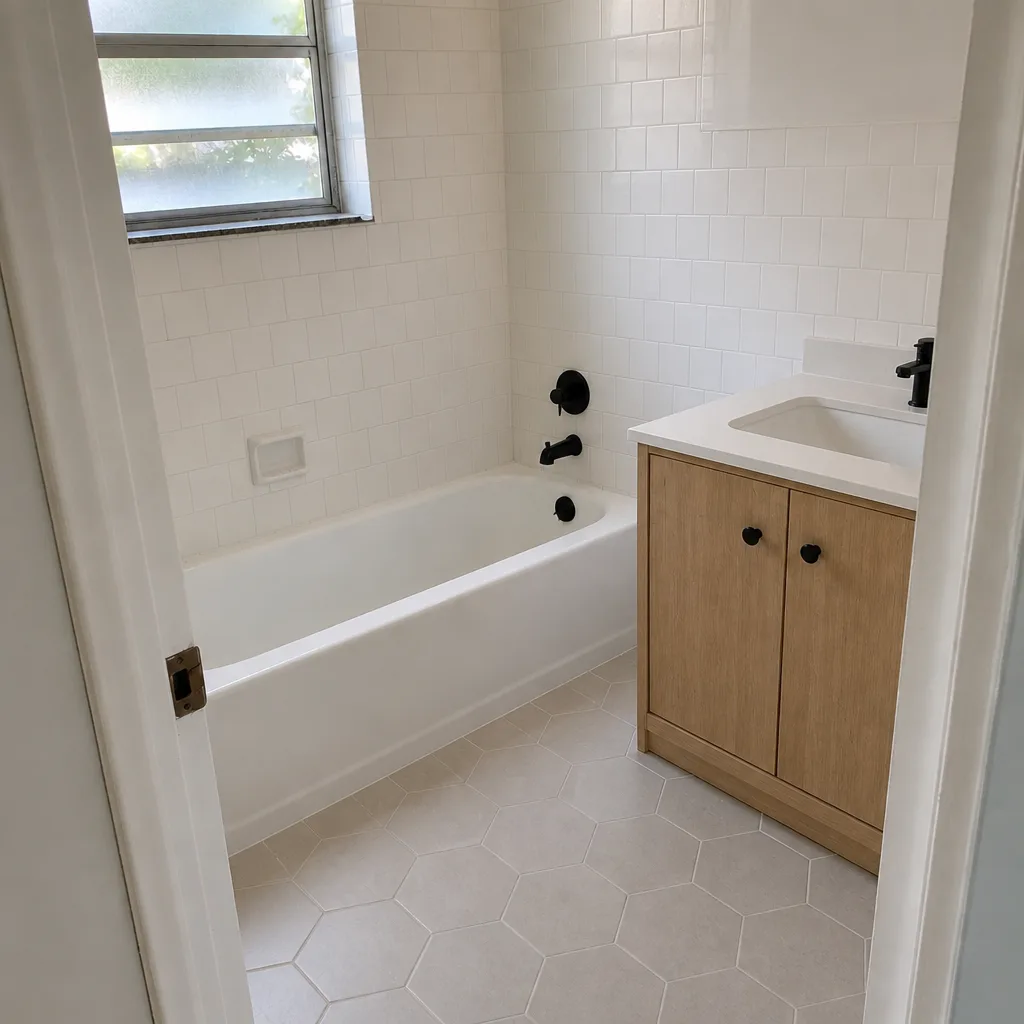
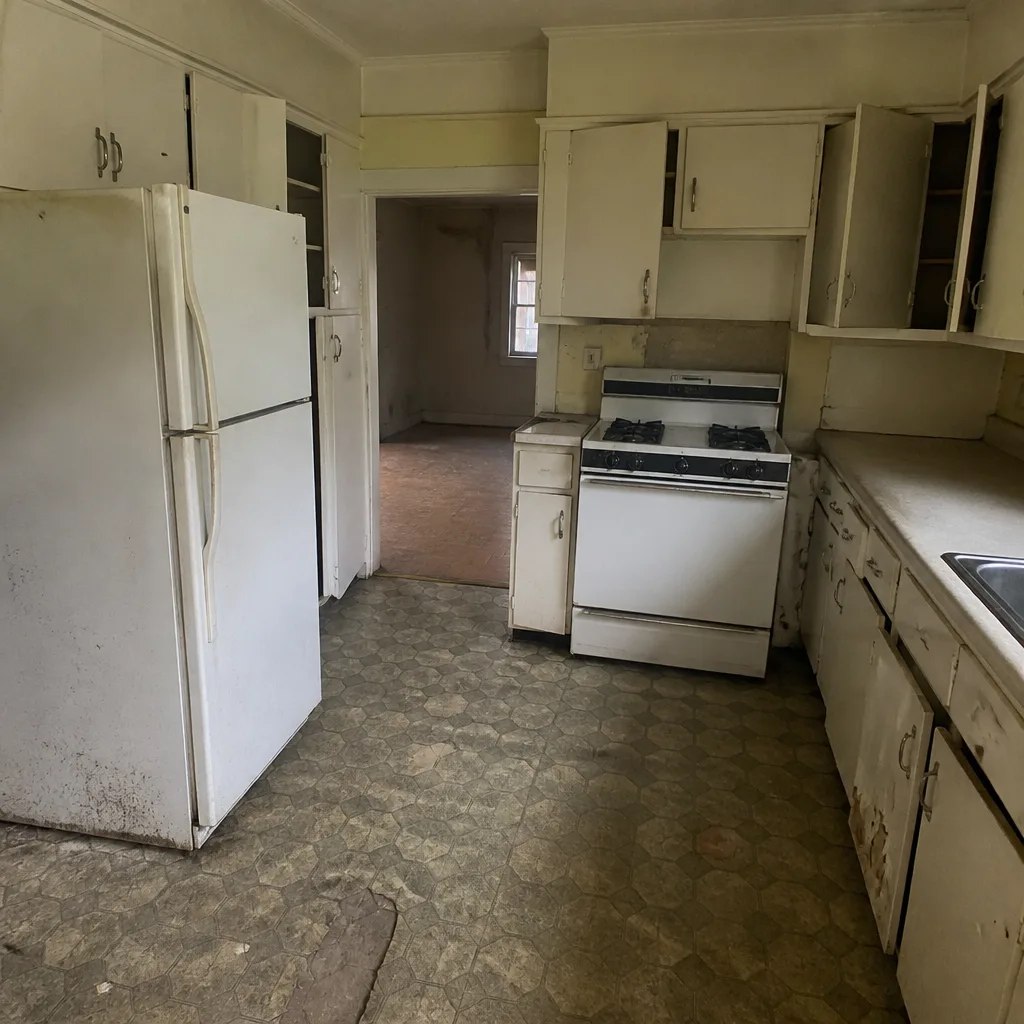
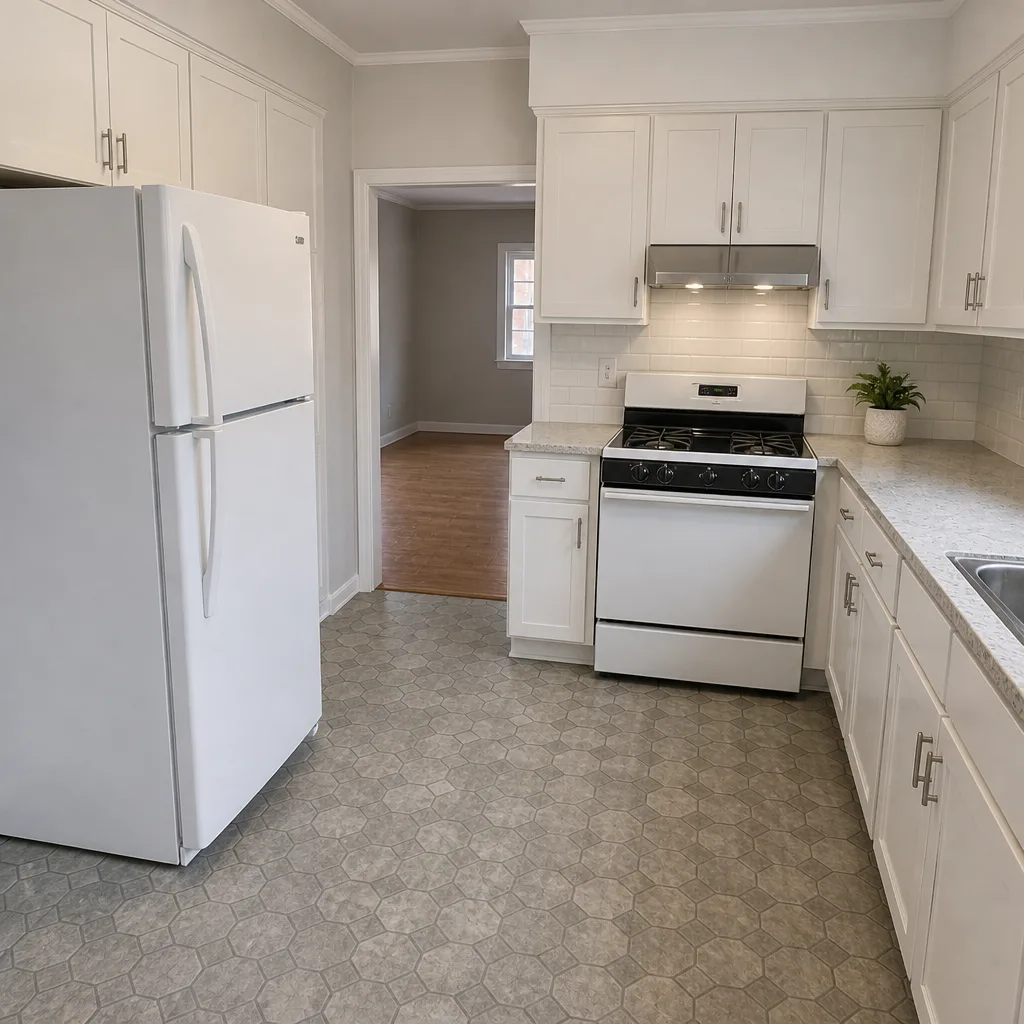
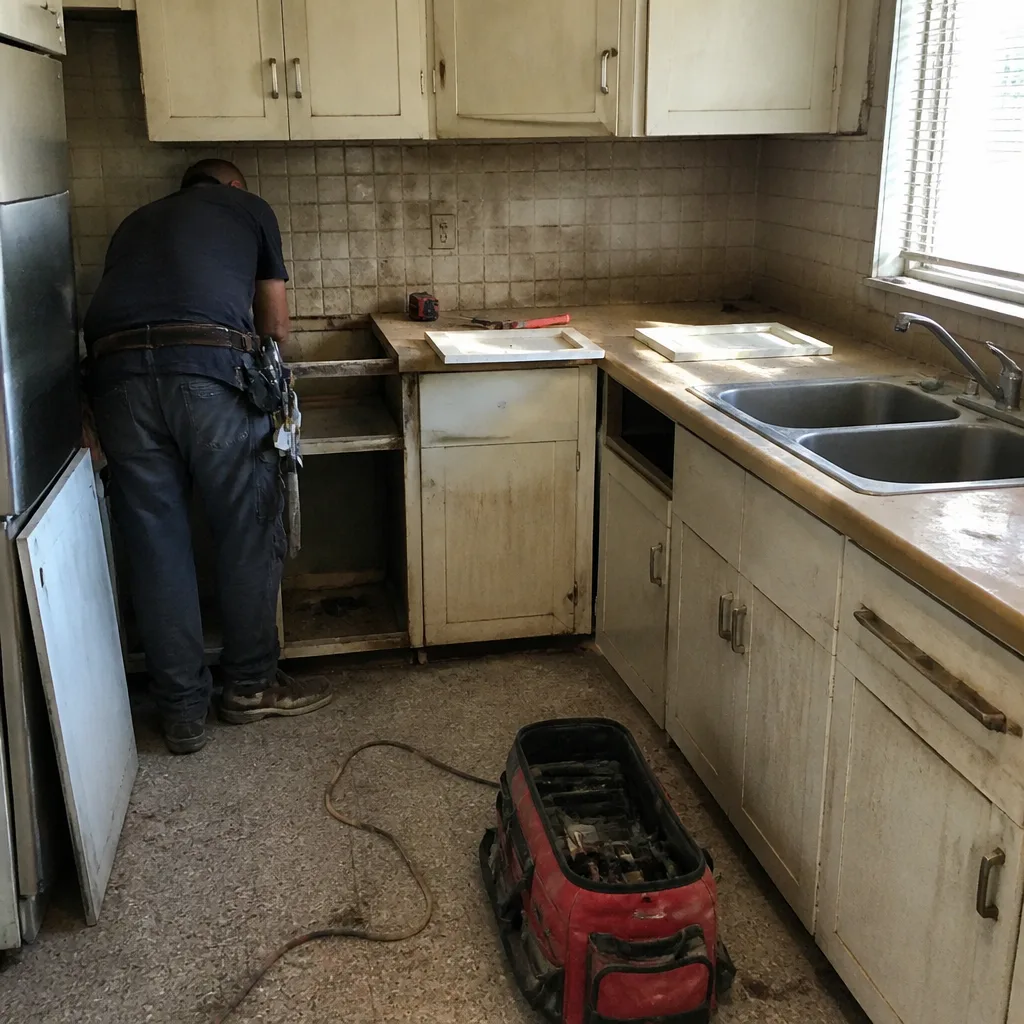
See the difference
 Before
 After
 Before
 After
 Before
 After
When to Call a Professional
Call a professional when a finding recurs after one repair attempt, when staining appears on any load-bearing element, when fascia is soft to the touch, or when a window or door frame joint has opened. These are the signs we treat as non-negotiable in a walkthrough, and the ones where a small repair done now is dramatically less expensive than the structural version done later. A single rust stain on a slab edge that you’ve watched for a year with no change is not urgent. A rust stain on a second-floor column is. When the findings span more than one trade – say, a soffit issue above a window issue above a roof-edge issue – the only way to fix it correctly is to fix it once, with one contractor accountable for all three legs of the water path.
Construction Miami Beach offers free estimates in Miami Beach. Call (844) 320-9310. We answer 24/7. Fast dispatch from 7am to 7pm, Sunday through Friday.
Frequently Asked Questions
No, but it’s always a sign of corrosion, and corrosion is always structural to some degree. A light stain on a non-load-bearing wall may only need a repair to the concrete cover and the moisture path behind it. Staining on a column, beam, or header involves steel doing structural work and needs a professional assessment to determine the extent. Painting over the stain does not stop the corrosion. Call (844) 320-9310 to schedule a free estimate – we answer 24/7.
Efflorescence is white, chalky, and dry, and it brushes off into a powder. It appears where water has moved through masonry and dried at the surface. Mold is usually darker, grows in a wet area and doesn’t dry to powder. Mold inside an exterior wall or under a soffit is a moisture problem, and it’s worth a professional look even if the area looks minor. Call (844) 320-9310 for a free estimate.
Patching without addressing the moisture path just resets the clock, and it usually resets it shorter. The steel inside is still exposed to the same environment, and any patch that doesn’t seal the source of moisture will be pushed off from behind within a couple of seasons. A real repair tests the moisture path and addresses both concrete and source. A written estimate from Construction Miami Beach costs nothing – call (844) 320-9310.
Check the shape. A linear heave running toward a tree is likely roots. A dip or heave concentrated where water pools is likely drainage, and drainage is the more common finding in Miami Beach. If the same spot ponds or heaves every rainy season, drainage is the strong favorite. Call (844) 320-9310 for a free estimate.
Look for a visible gap or shadow line at the joint where the frame meets the wall, sealant that’s peeled back to the frame, or water staining at the interior trim that shows up after a wind-driven rain. Weep holes at the bottom of the frame plugged with debris is the other common finding. Any of these deserves a repair, not a second layer of caulk. Call (844) 320-9310 – free estimates are available.
Fix water-path and structural findings now; hold cosmetic findings until the larger project. Rust staining on structural elements, soft fascia, and open window joints get worse on their own, and folding them into the eventual remodel later means paying for the same scope twice. Cosmetic staining that shows no change over a year can wait. Call (844) 320-9310 to sort out which is which at no charge – we answer 24/7.
Yes. One of the reasons we carry seven service lines is so a repair that spans roofing, soffit, windows, and concrete stays with one accountable contractor instead of three. A failing eave, a window joint, and a rust-stained header are often the same water path, and treating them as a single repair is cheaper and more durable than three separate fixes. Call (844) 320-9310 for a free estimate.
The Bottom Line
The findings that matter most on a Miami Beach home are the quiet ones: rust staining where steel sits inside concrete, efflorescence that keeps returning in the same pattern, soffit and fascia that soften over a wet season, a driveway that heaves along a water path, and a window frame that’s separated at the rough opening. None of these look urgent on the day you notice them. All of them get more expensive every year they’re left alone. Read your house this week, note the date and location of anything you find, and watch for recurrence. If something keeps coming back, that’s the signal. From the driveway to the ridge cap, we’re here to fix the finding and the cause behind it. Our technicians have up to 14 years of experience with fence installation and full exterior scope, and we can bring home additions & ADU work into the same plan when a warning sign turns into a larger remodel. From the foundation to the ridge cap, one contractor for every phase. Call (844) 320-9310. We answer 24/7. Fast dispatch from 7am to 7pm, Sunday through Friday.
Written by the team at Construction Miami Beach.